
All products on this site are intended for research and development purposes only and are not meant for human consumption of any kind. The statements made within this website have not been evaluated by the U.S. Food and Drug Administration (FDA). Neither the statements nor the products offered by this company are intended to diagnose, treat, cure, or prevent any disease.

Semaglutide
5mg
$53.99
Sale price
$53.99
Regular price
$182.99
Skip to product information


Semaglutide
Trusted by customers with 4.8/5 average rating.
$53.99
Sale price
$53.99
Regular price
$182.99

Free Shipping
We’ll make sure it makes it to your home.

30-Day Returns
Shop with confidence.

24/7 Support
Our team is always ready to help.
DETAILS
Semaglutide research compound. Supplied as a lyophilized peptide for laboratory research applications.
Purity-tested per lot.
For laboratory research use only. Not for human or veterinary use.
Characteristics
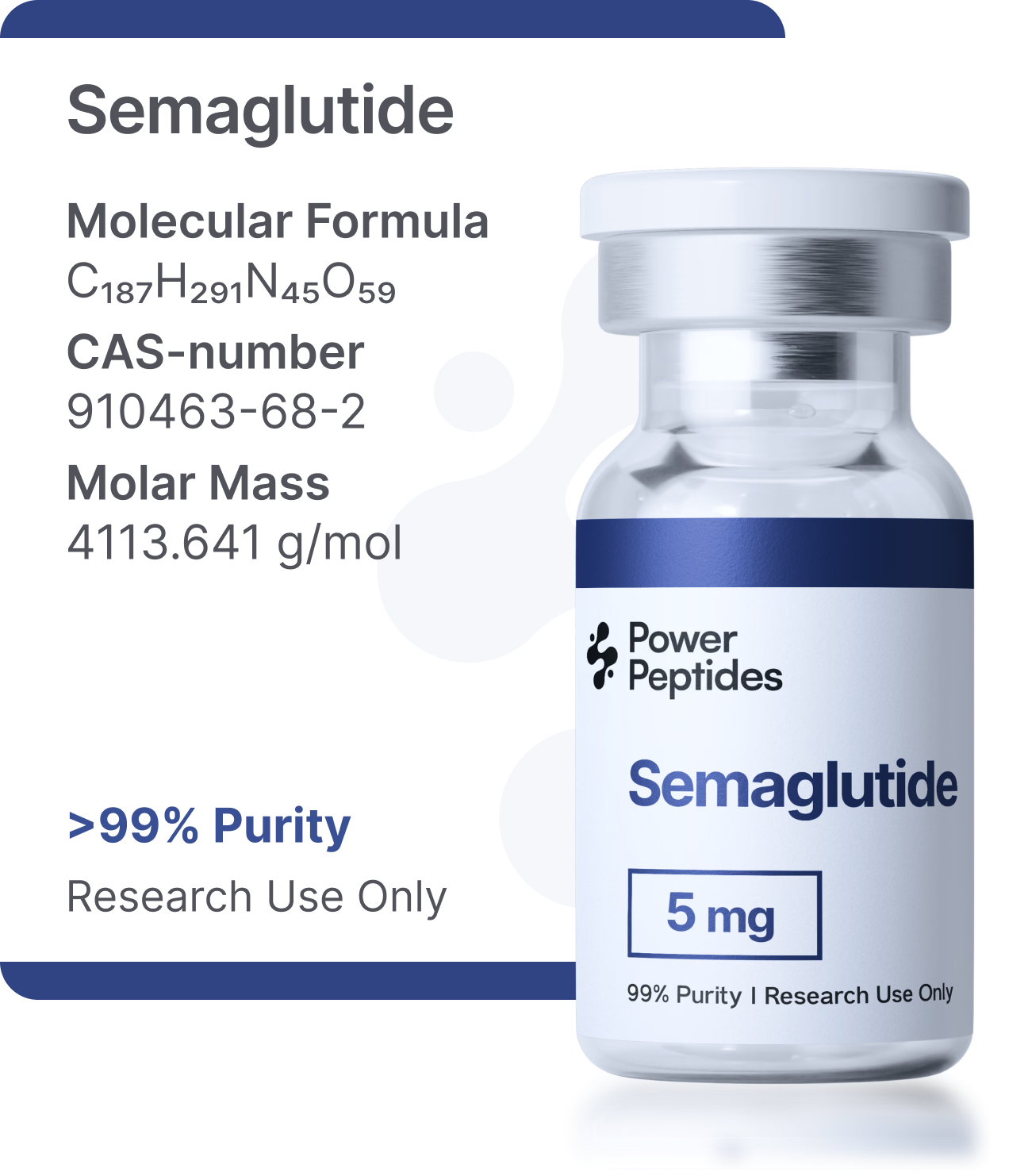
| Molecular Formula | C187H291N45O59 |
| CAS Number | 910463-68-2 |
| Molar Mass | 4113.641 g/mol |
| Amino Acid Sequence | His-Aib-Glu-Gly-Thr-Phe-Thr-Ser-Asp-Val-Ser-Ser-Tyr-Leu-Glu-Gly-Gln-Ala-Ala-Lys-Glu-Phe-Ile-Ala-Trp-Leu-Val-Arg-Gly-Arg-Gly-COOH |
| Synonyms | NN9535, NN9934, GLP1, GLP-1 |
| Solubility | Water-soluble |
| Organoleptic Profile | White to off-white powder |
| Composition | Lyophilized powder - requires reconstitution |
How does Semaglutide work?
Semaglutide exerts its effects through several interconnected mechanisms:
GLP-1 Receptor Activation: Semaglutide binds to and activates GLP-1 receptors, which are expressed in various tissues including pancreatic islets, the gastrointestinal tract, and the central nervous system. This activation initiates intracellular signaling cascades, primarily through cyclic AMP (cAMP) and protein kinase A (PKA) pathways.
Pancreatic Effects: In pancreatic β-cells, semaglutide enhances glucose-stimulated insulin secretion by increasing intracellular cAMP levels and promoting calcium influx. Simultaneously, it inhibits glucagon secretion from α-cells, contributing to improved glucose homeostasis.
Central Nervous System Effects: Semaglutide crosses the blood-brain barrier and acts on GLP-1 receptors in the hypothalamus and brainstem. This central action modulates appetite-regulating neurons, leading to reduced food intake and increased satiety.
Gastrointestinal Effects: By slowing gastric emptying, semaglutide helps to reduce postprandial glucose excursions and contributes to the sensation of fullness.
Cardiovascular System: While the exact mechanisms are not fully elucidated, semaglutide appears to have direct and indirect effects on the cardiovascular system. These may include improvements in endothelial function, reduction in inflammation, and beneficial changes in lipid metabolism.
Metabolic Rate: Some studies suggest that semaglutide may influence energy expenditure, potentially through effects on brown adipose tissue activation, although this area requires further investigation.
Hepatic Effects: Semaglutide has been shown to reduce liver fat content in patients with non-alcoholic fatty liver disease (NAFLD), possibly through improvements in insulin sensitivity and lipid metabolism.
The combined action of these mechanisms results in improved glycemic control, weight loss, and potential cardiovascular benefits observed in clinical studies. The complex interplay of these effects underscores the importance of continued research to fully elucidate the therapeutic potential and physiological impacts of semaglutide and other GLP-1 receptor agonists.
Research
Glucose Homeostasis: Semaglutide stimulates glucose-dependent insulin secretion from pancreatic β-cells while suppressing glucagon release from α-cells. This dual action contributes to improved glycemic control in individuals with type 2 diabetes mellitus (T2DM).
Appetite Regulation: By acting on GLP-1 receptors in the hypothalamus and other brain regions associated with appetite control, semaglutide reduces food intake and promotes satiety.
Body Weight Reduction: Through its effects on appetite and potentially other metabolic pathways, semaglutide has been shown to facilitate significant weight loss in clinical studies.
Cardiovascular Effects: Research indicates that semaglutide may have beneficial effects on cardiovascular risk factors, including improvements in lipid profiles and blood pressure.
Side Effects
The most common side effects associated with semaglutide include:
Nausea
Vomiting
Diarrhea
Abdominal pain
Constipation
Headache
Injection site reactions (for injectable formulations)
These side effects are generally mild to moderate and tend to diminish over time with continued use.
Summary
Semaglutide represents a significant advancement in GLP-1 receptor agonist research, offering a potent tool for investigating the multifaceted roles of GLP-1 signaling in metabolic and cardiovascular physiology. Its demonstrated efficacy in glycemic control, weight management, and potential cardiovascular benefits makes it a valuable subject for ongoing research in the treatment of T2DM, obesity, and related metabolic disorders. As investigations continue, semaglutide may provide insights into novel therapeutic strategies for addressing the growing global burden of metabolic and cardiovascular diseases.
References
Certificate of Analysis (COA)
Resource
All products on this site are for research and development use only. Products are not for human consumption of any kind. The statements made on this website have not been evaluated by the US Food and Drug Administration. The statements and the products of this company are not intended to diagnose, treat, cure, or prevent any disease. Power Peptides is not a compounding pharmacy or chemical compounding facility as defined under 503A of the Federal Food, Drug, and Cosmetic Act. Power Peptides is not an outsourcing facility as defined under 503B of the Federal Food, Drug, and Cosmetic Act. All products are sold for research, laboratory, or analytical purposes only, and are not for human consumption. Power Peptides Products are intended strictly for research purposes only. These products are not approved by the U.S. Food and Drug Administration (FDA) for human consumption or medical use. Under no circumstances should these peptides be used for any purpose other than research. By purchasing or using our peptides, you acknowledge and agree that you will use them solely in accordance with applicable laws and regulations and that you accept full responsibility for their use. Statements made on this website have not been evaluated by the USA Food and Drug Administration.
SHIPPING & RETURNS
📦 U.S. Shipping: Free shipping on all orders. Delivery in 3-7 business days via UPS/USPS.
🌎 International Shipping: Europe, the U.S., Canada, Brazil, Mexico, Australia, New Zealand, and the UAE. Shipping fees vary by destination and weight. DHL tracking provided.
⏱ Orders ship within 2–3 business days (non-holiday, non-sale periods).
💳 Refunds/Replacements: Eligible within 30 days if product is defective or damaged. Excludes opened/used items or lost/stolen packages.